International Ecommerce Shipping and Navigating Cross-Border Delivery
December 2024
The global eCommerce landscape provides huge opportunities for UK online businesses to reach new markets and drive revenue. But what do you need to know about cross-border delivery before you start shipping overseas?
Thankfully, today’s technologies and international parcel services combine smart features with robust networks that do a lot of the heavy lifting.
However, taking the first step to exporting beyond your own borders can be daunting.
This article aims to break down the complexities involved while signposting eCommerce international shipping solutions that make the process simple and seamless.
We’ll cover:
- The Growth of International eCommerce
- Benefits of Expansion for SME eCommerce Retailers
- What to Consider Before Shipping Overseas
- Working with a Multi-Carrier Delivery Management Partner
The Growth of International eCommerce
International eCommerce (also referred to as cross-border eCommerce) is growing fast. By 2030, it’s predicted that the world’s B2C cross-border eCommerce market will be worth $7.9trn, a huge increase from its $785bn value in 2021.
Fuelling this boom are factors such as increased levels of internet connectivity, the rise of mobile commerce and more favourable attitudes towards buying from abroad.
Dominant players, including Amazon, eBay and Etsy, have long established themselves across global markets. And more recently we’ve seen Chinese platforms such as Shein and Temu enjoy rapid international expansion.
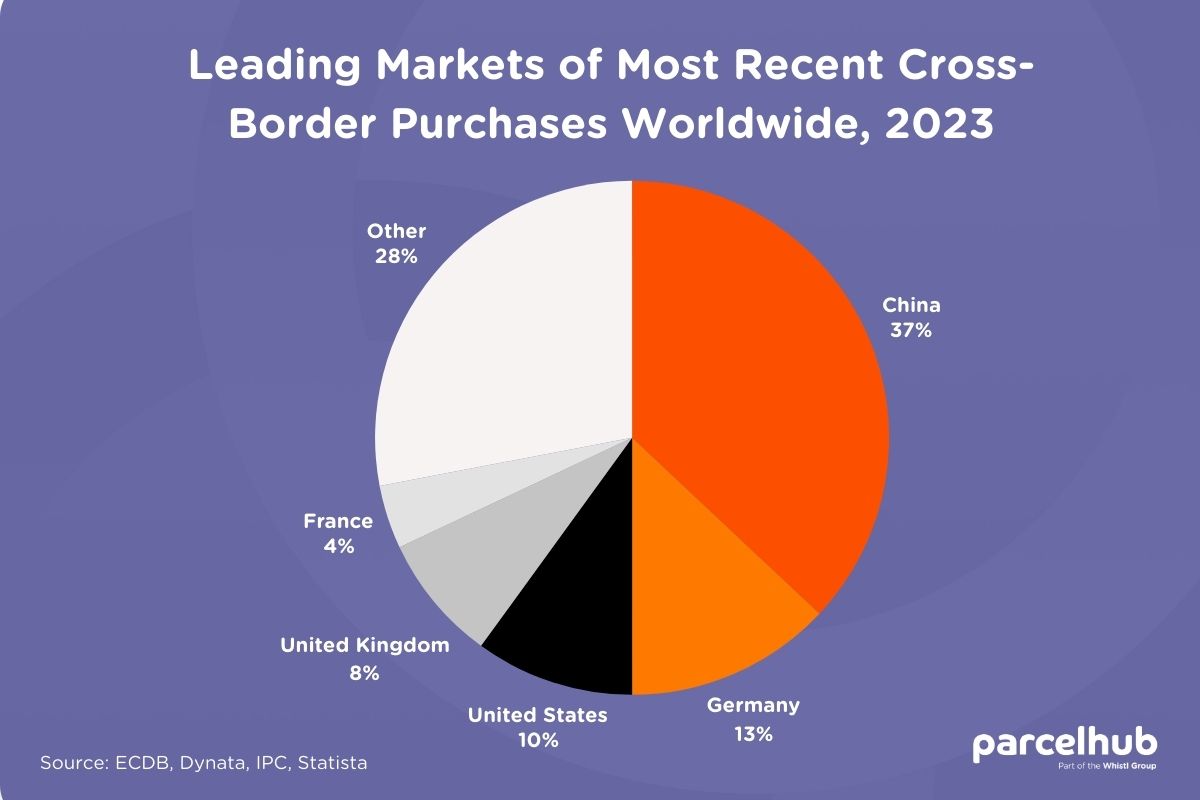
In fact, 37% of global shoppers made purchases from Chinese-based eCommerce platforms in the past year. This makes China the most popular cross-border eCommerce market, followed by Germany (13%), the United States (10%) and United Kingdom (8%).
But apart from simply having the means to shop around the world, what else is driving this consumer appetite for global brands?
Greater product variation, affordability and the novelty of buying from an international seller each play a part in the decision-making process.
All of which opens the door to online retailers ready to cash-in on ever-increasing demand.
Benefits of Expansion for UK eCommerce Retailers
The ability to send parcels overseas can help to drive revenue and make your business more resilient.
Key benefits of expansion include:
- Increased Revenue: Expanding into new markets can significantly increase revenue for eCommerce retailers. Especially if you’re tapping into markets where there’s high demand for what you’re selling.
- Enhanced Brand Awareness: International shipping can help to raise brand awareness and build a global customer base.
- Diversification: Selling products in multiple markets can help to reduce the impact of any downturns in domestic demand.
- Improved Competitiveness: By offering international parcel delivery, small to mid-sized online retailers can compete more effectively with larger businesses.
- Access to New Customers: Being able to offer international parcel delivery provides access to customers who otherwise may not have been able to purchase your products.
For UK-based businesses, the subject of accessing overseas markets is receiving a lot of attention. In June 2023, the E-Commerce Trade Commission was set-up with the sole purpose of helping small businesses start exporting using online platforms.
Its creation followed a report released by the Social Media Foundation. It found that if the 70,000 small businesses not currently exporting could be encouraged to do so, it could generate £9.3bn in additional value for the UK economy.
What to Consider Before Shipping Overseas
There are plenty of potential upsides to expansion. But the long-term winners will be the eCommerce businesses that can nail both their brand and operations.
For example, standout product positioning and targeted marketing campaigns will go some way to gaining a foothold in a new market. However, this is only one component of a successful strategy.
A successful launch into cross-border eCommerce requires an insights-led approach, an understanding of your legal requirements, and a concrete plan to streamline your international parcel shipping.
Start by researching your target market(s). This is a crucial part of the process and one that should be followed before even considering whether to expand.
Before diving in, answer these questions:
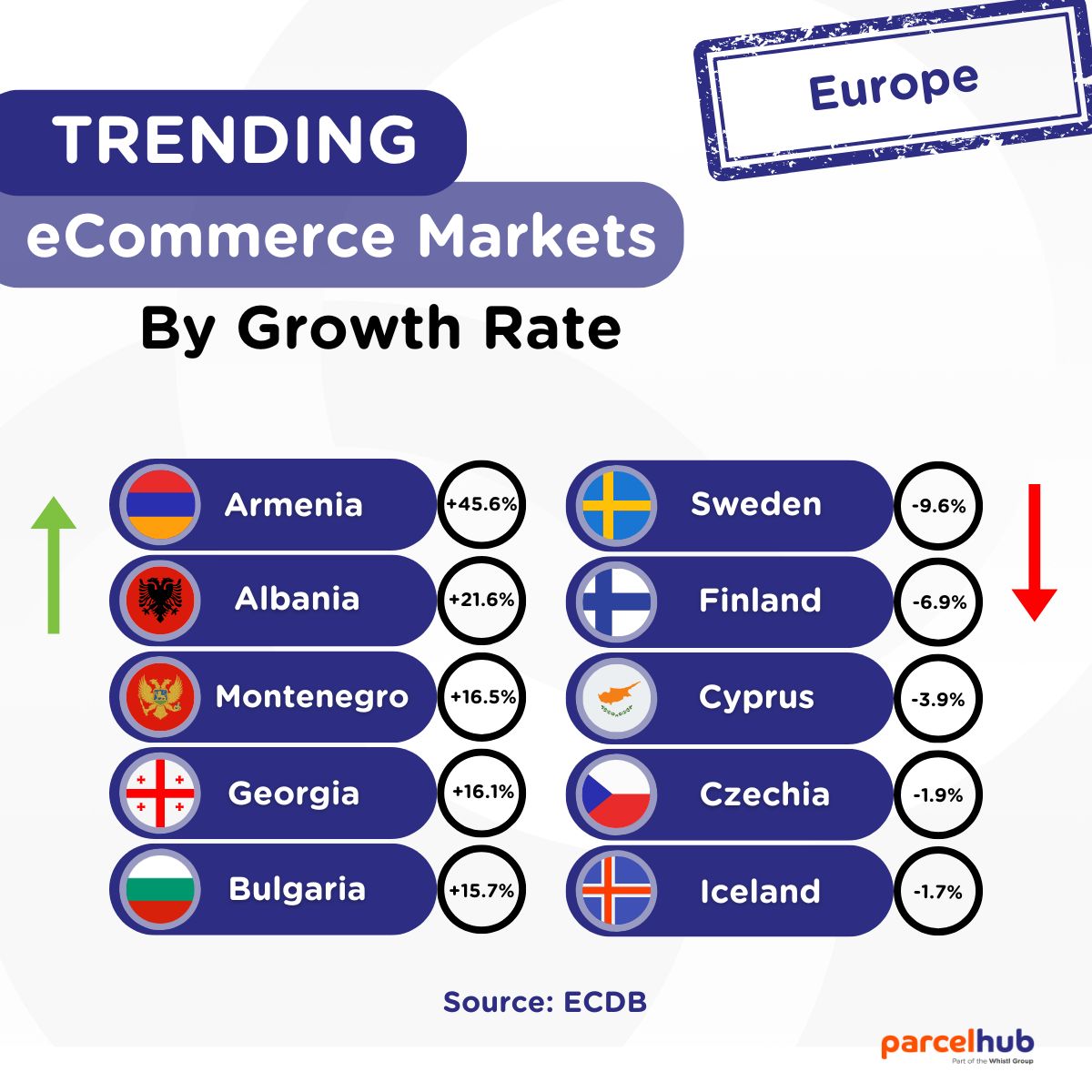
- Which markets are growing right now? Focus on established and fast-growing eCommerce markets where you’re more likely to find demand. Sites such as Ecommerce Europe and ECDB regularly report on market trends across Europe and the rest of the world. Their reporting includes country-by-country insights that highlight movements within product categories.
- Where are my website visits and transactions coming from? Review your platform analytics and look for spikes from specific countries. Similarly, identify if there are any patterns within your recent transactions.
- How much competition is there? Research whether your target market is already oversaturated or whether there’s a gap you can exploit to promote your products.
- Are there any prohibitive local regulations? The size, weight and type of products you sell are some of the factors that will determine whether you can sell to your target market. Other local competition laws may also have an impact on your ability to export. It’s vital you check local regulations and restrictions.
The Importance of Localisation
Simply airlifting what works in your domestic market is unlikely to reap rewards. Instead, localise your offering to meet the specific needs and preferences of your target customers. This may involve factors such as:
- Language: Translate your website, product descriptions, and customer support materials into the languages of your target markets.
- Currency: Offer payment options in local currencies to make it easier for customers to purchase your products.
- Cultural Differences: Be mindful of cultural differences and tailor your marketing and customer service approach accordingly.
- Shipping and Returns: Ensure that your shipping and returns policies are clear and easy to understand for customers in different countries.
Understanding Taxes and Regulations
One of the biggest barriers to international shipping is the costs associated and their potential impact on both retailers and consumers. Technology and integrations can make this process simpler at the point-of-sale but there are still some fundamentals you need to be aware of.
These include:
- Cross-Border Taxation: Understanding the tax implications of international ecommerce is essential to avoid penalties and fines. Different countries have varying tax rules, including VAT, sales tax, and customs duties.
- Currency Fluctuations: Changes in exchange rates can impact the profitability of international transactions.
- Trade Restrictions: Some countries may have trade restrictions or quotas in place that can limit the import or export of certain goods.
- Data Privacy Regulations: Businesses must comply with data privacy regulations in all the countries they operate in.
Key Terms in International Shipping
Cross-border eCommerce is full of acronyms and phrases. These may appear confusing at first so here’s a handy set of explainers for some of the key terms you’re likely to come across:
- EORI Numbers: Any seller based in Great Britain or Northern Ireland will need to register for an EORI number if exporting to the European Union. An Economic Operators Registration and Identification (EORI) number enables customs authorities to identify who is responsible for the goods being transported.
- HS Codes: The Harmonized System (HS) Code system is used by international authorities to classify products, apply customs duties, and collect relevant trade information on imports. When shipping internationally, you’ll need to use HS codes to ensure your products can be properly identified. HM Revenue & Customs provides advice on how to find the correct commodity code before shipping.
- IOSS: The Import One-Stop Shop (IOSS) has been set-up to streamline the collection of VAT and duties when shipping to the EU. Rather than having to register with multiple tax authorities across different member states, the IOSS facilitates one monthly VAT return to ensure correct payments are made. The IOSS only applies to eCommerce sellers based in Great Britain (or other third countries) sending goods with a consignment value that does not exceed €150. Speaking to a Parcelhub expert can help you better understand the IOSS and ensure you follow the correct procedures.
- DDP: Delivery Duty Paid (DDP) signifies that the seller is responsible for all costs and risks associated with transporting goods to their intended destination. It effectively means goods are sold with the price of any duties or customs fees already accounted for.
- DAP/DDU: Delivery at Place (DAP), sometimes still known as Delivery Duty Unpaid (DDU), means the seller is responsible for the delivery of goods but the buyer will pay any import duties and taxes.
Working with a Multi-Carrier Delivery Management Partner
Cost, speed and convenience are crucial factors within international parcel delivery. And a multi-carrier delivery management partner is an invaluable ally.
By leveraging a multi-carrier partner’s network, technology and expertise, an eCommerce business can ensure seamless market entry and delivery to its new target customers.
Here’s a summary of the main benefits:
- Enhanced Choice: Being able to choose from multiple carriers provides both you and your customers with a wider selection of delivery options to meet different preferences and budgets.
- Improved Shipping Rates: Multi-carrier partners can often negotiate better shipping rates with international couriers, resulting in cost savings.
- Access to technology: The smart integrations offered by a multi-carrier partner make it easier to manage orders, label production, online marketplaces and your selected international parcel services.
- Simplified Shipping Management: A single platform can be used to manage shipments from multiple couriers, reducing the time and hidden cost burden.
- Enhanced Tracking and Visibility: Multi-carrier partners can provide real-time tracking information for all shipments, improving visibility and customer satisfaction.
- Cross-Border Delivery Expertise: Seeking the advice of an expert partner helps you to mitigate some of the risks involved in cross-border eCommerce. Meanwhile, leveraging your partners’ country insights can help to accelerate growth.
Unlock the Potential of International eCommerce Shipping
International eCommerce offers significant opportunities for UK businesses to expand their reach and increase revenue.
However, it’s essential to understand the challenges involved and take the necessary steps to overcome them.
By working with a multi-carrier delivery management partner (like Parcelhub), eCommerce businesses can successfully navigate the complexities of international shipping and achieve long-term growth.
Get in touch if you’d like to discuss how to approach cross-border delivery and reach new markets.
Additional Resources:
UK Government Guide to Exporting
Share this article
You may also like...