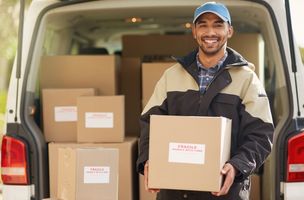
The journey of a product from creation to customer can be complex, with a considerable environmental impact at every stage. Every day, vast quantities of goods are transported by road, air, sea, and rail. While the logistics sector plays a vital role in the global economy, it also significantly contributes to emissions and resource consumption.
Sustainable logistics focuses on rethinking how goods are transported, stored, and delivered to minimise environmental harm. This approach includes reducing emissions, cutting down on waste (particularly packaging), conserving resources such as fuel, and improving operational efficiency, all while maintaining reliable and commercially viable services.
Previously seen by some as a secondary consideration or a compliance exercise, sustainable logistics has now become a core focus for progressive businesses. This shift is driven by a combination of urgent environmental challenges, growing consumer expectations for responsible practices, stronger regulatory requirements, and the clear financial benefits of greener operations.
Why is Sustainable Logistics Accelerating Now?
Several factors are driving the growing momentum behind sustainable practices for businesses and consumers alike. Understanding these drivers sheds light on why the shift is happening so rapidly.
- The Environmental Imperative: The link between logistics activities and environmental strain is undeniable. Transporting goods, whether by road, air, sea, or rail, generates greenhouse gas emissions. Warehousing operations consume significant amounts of energy, and packaging adds to global waste streams. With the UK’s climate targets and Net Zero commitment requiring substantial emissions reductions, the logistics sector has both a clear responsibility and a valuable opportunity to innovate and minimise its environmental footprint.
- Shifting Consumer Expectations: Modern consumers are increasingly informed and selective. There is a rising demand for transparency and environmental responsibility from the brands they support. Many actively choose businesses offering eco-friendly options, such as sustainable packaging or lower-emission delivery services. For companies, aligning with these values is no longer a question of optional virtue signalling; it is becoming essential for attracting and retaining customers. Eco-conscious consumers are making their preferences clear through their purchasing decisions.
- Regulatory Drivers: Governments and international bodies are implementing more stringent measures to encourage greener practices. These include tighter vehicle emissions standards, the expansion of Clean Air Zones (CAZs) and Ultra Low Emission Zones (ULEZs) across UK cities, discussions around introducing carbon taxes or levies, and participation in emissions trading schemes. These regulatory frameworks create an environment that increasingly rewards organisations actively working to reduce their carbon footprint.
The Strengthening Business Case
Sustainability is also proving to be good business practice:
- Operational Efficiency: Sustainable initiatives often lead to greater efficiency. Advanced route optimisation tools reduce fuel consumption and driver hours. Minimising packaging lowers material costs and shipping weight, while energy-efficient warehouses cut utility expenses - all contributing to real cost savings.
- Brand Reputation and Competitive Advantage: Genuine sustainability efforts enhance brand image. They help attract environmentally conscious customers as well as employees who want to be part of responsible organisations. In a competitive market, strong green credentials can create a valuable point of difference.
- Risk Mitigation: Preparing early for carbon pricing, regulatory changes, or resource constraints strengthens long-term business resilience. Proactive sustainability measures can help organisations avoid future financial and operational risks.
Key Pillars of Sustainable Logistics in Action
Achieving meaningful reductions in environmental impact requires action across several key areas of the logistics operation. Here are some of the main pillars where significant progress is being made:
Greener Transportation
Transportation is often the most visible aspect of logistics and holds considerable potential for emissions reduction. The move away from traditional fossil fuels is well underway, particularly here in the UK.
- Electric Vehicles (EVs): The adoption of electric vans and smaller trucks for last-mile delivery in urban areas is becoming increasingly common, supported by advances in battery technology and the expansion of charging networks. Electric vehicles eliminate exhaust emissions, improving local air quality. So far this year, DPD has saved 6,561 tonnes of CO₂ through electric deliveries. Earlier this year, Whistl participated in the UK’s first emission-free delivery trial, transporting packages across a fully emission-free network. Parcelhub, part of the Whistl Group, has also been transitioning its van fleet to electric power, enabling zero-emission parcel collections from customers.
- Biofuels: Advanced biofuels, such as Hydrotreated Vegetable Oil (HVO), can act as 'drop-in' replacements for diesel, allowing existing HGV fleets to lower their carbon emissions without immediate vehicle replacement. Many leading UK carriers are trialling or implementing HVO schemes, which can reduce emissions by up to 90%.
- Route Optimisation and Network Design: Smarter planning delivers significant efficiency gains. Modern technology, including AI and advanced data analytics, enables carriers to calculate the most efficient routes, factoring in traffic, delivery windows, and vehicle type. This reduces mileage, fuel consumption, and emissions. Optimising network design, such as consolidating shipments to ensure vehicles operate at full capacity, further reduces the number of journeys required.
Sustainable Packaging Solutions
The packaging a consumer receives is a key touchpoint and an important area for sustainable improvement.
- Material Innovation: There is a strong movement towards using packaging made from recycled materials and ensuring that packaging itself is easily recyclable. In fact, 21% of online shoppers say they would stop purchasing from a retailer that does not use sustainable packaging. Alternatives, such as biodegradable or compostable materials derived from mushrooms, are also emerging to help reduce landfill waste.
- Reduction and Right-Sizing: Often, the most sustainable packaging is simply less packaging. Right-sizing boxes to match products minimises wasted space and reduces the need for void fill materials, such as plastic air pillows or foam. This not only cuts down on waste but can also lower shipping costs due to reduced parcel dimensions and weight.
- Communication: Clear labelling helps consumers dispose of packaging correctly. Using standardised labels, such as the UK's On-Pack Recycling Label (OPRL), guides customers on which parts can be recycled, helping to increase overall recycling rates.
Eco-Conscious Warehousing and Operations
Distribution centres and warehouses are major energy users, presenting strong opportunities for improvement.
- Energy Efficiency: Implementing energy-saving measures is crucial. Common improvements include switching to LED lighting (often fitted with motion sensors), improving insulation, installing high-speed doors to reduce heat loss, and fitting solar panels to large roof spaces to generate on-site renewable energy. Designing new facilities to high environmental standards, such as BREEAM, embeds sustainability from the outset. For example, Evri opened a flagship superhub in Barnsley featuring solar panels, rainwater harvesting systems, acoustic bunds to reduce noise pollution, and the planting of 25,000 new trees and hedgerows to support local wildlife.
- Waste Reduction: Beyond packaging, warehouses generate various types of waste. Improving internal waste reduction programmes, through better waste sorting, increased recycling, and partnerships that find new uses for surplus materials, helps divert more waste away from landfill.
Tailoring Sustainability for Online Retail
The rapid expansion of eCommerce has reshaped retail, bringing unique logistical challenges and environmental considerations. For online retailers, embedding sustainability into operations has become essential for meeting customer expectations and demonstrating responsible business practices.
Offering Greener Choices at Checkout
Empowering customers to make environmentally conscious decisions is crucial. Many online retailers now provide delivery options specifically designed to reduce environmental impact, including:
- Carbon-Neutral Shipping: This is often achieved by investing in certified offsetting projects to balance out the emissions generated by delivery activities. Shiptheory enables merchants to offer carbon-neutral shipping across all orders, regardless of service or carrier, or to allow customers to choose to offset carbon at checkout.
- Slower, Consolidated Delivery: Offering a slightly longer delivery window allows logistics providers to group more parcels together, leading to fewer vehicle journeys and lower emissions per item. Clearly communicating the environmental benefits of these greener choices helps customers feel positive about selecting them.
- Packaging as a Brand Statement: In eCommerce, the delivered package is often the most tangible interaction a customer has with the brand. Sustainable packaging, therefore, becomes part of the brand experience. Opting for recycled, recyclable, or biodegradable materials, minimising void fill, and even using custom-printed eco-friendly tape can communicate a brand's commitment to sustainability directly to the customer. This thoughtful approach reinforces brand values and builds customer loyalty.
Tackling the Returns Challenge
Online retail typically sees return rates of around 18%, significantly higher than traditional high street stores, creating a notable logistical and environmental hurdle. Developing efficient and sustainable reverse logistics processes is critical. This includes:
- Streamlining the collection and consolidation of returned items to minimise transport emissions.
- Implementing effective inspection, cleaning, and refurbishment procedures to return products to stock quickly.
- Finding responsible pathways for items that cannot be resold, such as donation, resale marketplaces, or disassembly for recycling, ensuring as little waste as possible is sent to landfill.
Addressing the root causes of returns through clearer product descriptions, detailed sizing guides, and improved imagery online also plays an important role in reducing the volume of returns.
Future Trends Shaping Sustainable Logistics
The progress made in sustainable logistics has laid the foundation for further evolution. As we move through the remainder of the decade and beyond, several key trends are expected to shape the sector:
- Accelerated Technological Advancement: Innovation will continue to drive change. Improvements in electric vehicle (EV) range, battery life, and charging infrastructure are making electric power a viable option for a broader range of vehicles and routes. While fully autonomous vehicles remain some way from widespread deployment due to regulatory and infrastructure challenges, development is ongoing and could offer long-term efficiency benefits. Research into advanced biofuels, Sustainable Aviation Fuel (SAF), and hydrogen technologies is also gathering pace, aiming to decarbonise heavy goods transport and aviation. Meanwhile, predictive analytics and AI are becoming increasingly sophisticated, enhancing areas such as warehouse inventory management and real-time delivery route optimisation.
- Circular Economy Integration: Circular economy principles are set to become more deeply embedded within logistics. This extends beyond traditional recycling towards designing systems that actively support product reuse, repair, refurbishment, and remanufacturing. Logistics providers will play an increasingly important role in managing reverse flows, collecting used products, transporting them for assessment or processing, and reintroducing materials or components into the supply chain. This shift represents a move away from linear models towards managing resources within a continuous loop.
- Greater Transparency and Reporting: The expectation for verifiable proof of environmental performance is rising. Regulations such as the evolving UK Sustainability Reporting Standards, alongside pressure from investors and customers, are making robust environmental reporting standard practice. Businesses will be required to track and disclose detailed data, including Scope 3 emissions (those generated across their broader value chain). Greater standardisation in measurement and communication is expected, demanding higher levels of transparency throughout the supply chain.
Conclusion
The shift towards sustainable logistics is far more than a passing trend. It reflects a profound transformation driven by the urgent need to reduce environmental impact, evolving consumer and regulatory expectations, and clear business benefits in efficiency, reputation, and risk management. Companies are actively adopting a range of strategies, from cleaner transport solutions like EVs and route optimisation to sustainable packaging innovation, enhanced warehouse operations, and the use of intelligent technologies.
The future points towards continued technological advancement, greater industry collaboration, deeper integration of circular economy principles, and an increasing emphasis on transparency and measurable performance.
Sustainable logistics is not simply a matter of compliance or enhancing corporate image. It represents a critical evolution for the industry's long-term viability and the health of the environment we all depend on. By embedding sustainability into core strategies and operations, businesses can strengthen their resilience to future challenges, unlock new efficiencies, deepen customer loyalty, and position themselves for a future where environmental responsibility and commercial success go hand in hand.
Ready to make your logistics greener and more efficient?
Parcelhub’s multi-carrier delivery solutions are designed to help businesses optimise shipping processes, reduce environmental impact, and meet evolving customer expectations. Discover how we can support your journey towards more sustainable logistics. Contact Parcelhub today.
Share this article
You may also like...