Cart abandonment has become as a major hurdle for online businesses. Put simply, it occurs when a customer adds items to their basket but leaves the website without completing the purchase. They’ve shown intent, browsed the products, and made their selections, yet at the critical final step, they fail to complete the purchase.
This seemingly minor action can significantly impact a business’s bottom line. It represents lost revenue, missed opportunities for upselling and cross-selling, and even potential damage to customer relationships.
A high cart abandonment rate often signals friction in the buying process, which can push customers toward competitors offering a smoother experience. For any eCommerce business looking to succeed in 2025 and beyond, reducing cart abandonment must be a top priority.
Understanding Cart Abandonment
Cart abandonment is a widespread issue, with significant implications for online businesses. According to the Baymard Institute, a web usability research organisation, an estimated 70% of online shoppers fail to complete their purchases. This means that out of every 10 customers who add items to their basket, roughly seven will leave without finalising the transaction.
Research by the payment firm Elavon sheds light on the key reasons UK shoppers abandon their carts:
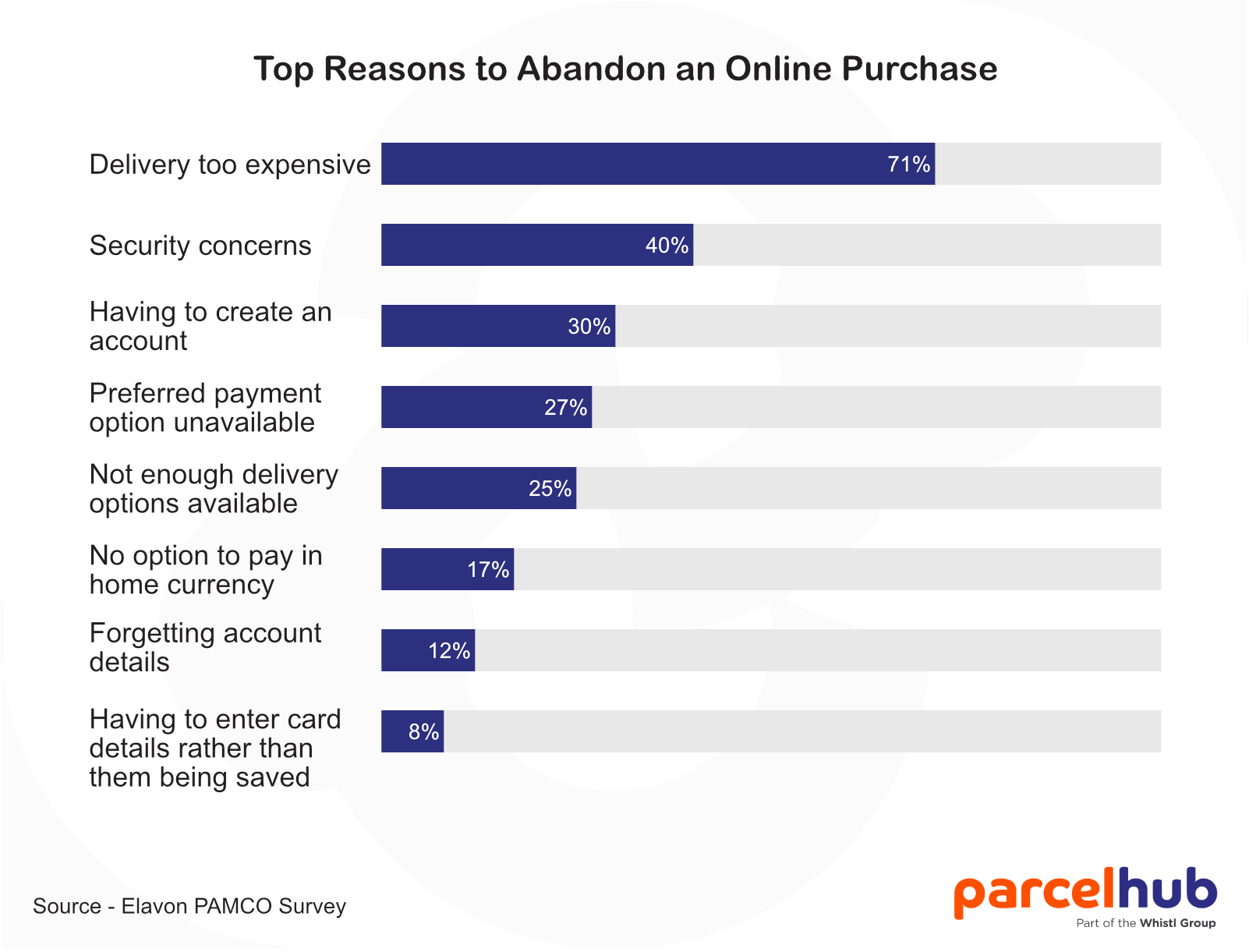
These statistics emphasise the importance of addressing the underlying causes of cart abandonment. By recognising the potential for revenue loss, businesses are better positioned to invest in solutions that enhance the customer journey, improve conversion rates, and ultimately strengthen their bottom line.
Reasons and Strategies to Reduce Cart Abandonment
Understanding why customers abandon their online baskets is crucial for devising effective strategies to tackle the issue. Insights from Elavon’s research highlight key reasons behind cart abandonment, uncovers customer behaviours and the pain points encountered during the checkout process. These findings reveal clear obstacles that prevent customers from completing their purchases.
Cost and Delivery Concerns Dominate
A large share of cart abandonment stems from issues related to costs and delivery.
- Expensive Delivery Tops the List (71%): The most common reason for cart abandonment is unexpectedly high delivery charges. This underscores the need for transparent and competitive shipping rates. Displaying delivery costs early in the shopping process is essential to building trust and minimising surprises.
- Insufficient Delivery Options (25%): Customers increasingly expect a variety of delivery choices, such as standard, next-day, parcel lockers, and even international shipping. A lack of options can frustrate customers and lead to lost sales.
Security, Account Creation, and Payment Friction
Issues beyond cost and delivery also play a significant role in cart abandonment.
- Security Concerns (40%): Many customers are hesitant to complete a purchase due to concerns about the security of their personal and financial information. Businesses must implement robust security measures and clearly communicate how customer data is protected.
- Forced Account Creation (30%): Requiring customers to create an account is a major barrier to completing a purchase. Offering a guest checkout option can help reduce friction and improve conversion rates.
- Lack of Payment Options (27%): Customers expect flexibility in payment methods, such as credit/debit cards, digital wallets (e.g. PayPal, Apple Pay, Google Pay) and buy-now-pay-later services. Catering to diverse payment preferences is crucial to avoiding abandoned carts.
- Inability to Pay in Home Currency (17%): For international shoppers, not being able to pay in their home currency can discourage purchases. Providing multi-currency payment options can enhance the experience for global customers.
- Forgotten Account Details (12%): Customers who forget their login credentials may abandon their carts out of frustration. Simplifying account recovery processes, such as password resets or social logins, can mitigate this issue.
- Inconvenience of Entering Card Details (8%): Although less common, some customers abandon their carts due to the effort required to input card details. Solutions like one-click payments or digital wallets can streamline the process and reduce this friction.
By addressing these common causes of cart abandonment, online retailers can recover lost sales and improve conversion rates. The data highlights the critical areas to focus on: cost transparency, secure transactions, and a seamless checkout experience.
Acting on these areas can help businesses thrive in an increasingly competitive market.
Conclusion
Cart abandonment remains a significant challenge in eCommerce, driven by key factors such as delivery costs, security concerns, checkout friction, and limited payment options. By analysing these primary drivers, we’ve outlined practical strategies and targeted solutions that businesses can implement to address these issues effectively.
To summarise the core recommendations:
- Prioritise Transparent and Competitive Delivery: Clearly display all delivery costs upfront and offer a variety of delivery options to cater to different customer needs.
- Reinforce Website Security and Build Trust: Display trust badges, ensure a secure checkout process, and communicate your data protection measures effectively.
- Streamline the Checkout Experience: Offer guest checkout, simplify account management, and provide a wide range of secure payment methods.
- Offer Multi-Currency Options: For international customers, providing the option to pay in their home currency is crucial.
- Simplify Card Entry: Streamlining the card entry process, even if it only affects a small percentage of customers, helps to further reduce friction.
Ultimately, reducing cart abandonment is about adopting a customer-centric approach. By focusing on creating a transparent, secure, and convenient shopping experience, businesses can significantly improve conversion rates and recover lost sales. By implementing these strategies and placing the customer at the heart of the online shopping journey, eCommerce businesses can not only reduce cart abandonment in 2025 and beyond but also build stronger customer relationships and drive sustainable growth.
Ready to Reduce Cart Abandonment?
Expensive delivery and insufficient delivery options are significant reasons for cart abandonment. Parcelhub can help you boost conversions with our multi-carrier delivery solutions for eCommerce shipping:
- Tracked Parcel Delivery - Reliable, flexible, and cost-effective shipping options to suit every need.
- Seamless Returns Management - Enhance customer loyalty with a hassle-free returns experience.
- International Delivery - Expand your reach and grow your business with efficient global shipping.
- Enhanced Delivery Management - Ensure smooth operations with expert support for all your delivery-related queries.
Contact us today to learn how Parcelhub can help your business thrive.
Share this article
You may also like...